
 Photoshop
 Maya
Maya ZBrush
 Houdini
 Substance Painter
 Blender
 Arnold
 Nuke
Nuke KeyShot
 V-Ray
V-Ray Marvelous Designer
 Mari
Mari Marmoset Toolbag
 Substance Designer
 3ds Max
 Redshift
 3D Coat
 Lightroom
 Faceform Wrap
 After Effects
 Octane Render
 Speed Tree
 Daz3D
Daz3D Reality Capture
 Agisoft Metashape
 Modo
Modo Fusion
 Gravity Sketch
 Gaea
Gaea Premiere
 Cinema 4D
 Procreate
 Katana
 Quixel DDO
 Mudbox
 Mixamo
 SketchBook Pro
 SketchUp
 Adobe Medium
 Clip Studio Paint
 Natron
 Quixel Bridge
 Quixel Megascans
 Quixel Mixer
 Substance 3D Modeler
 World Creator
 Yeti
Yeti Ziva VFX
 Massive
 Materialize
 TreeIt
 Ornatrix
 PreForm
 SynthEyes
 Corel Painter
 QuickTime
 StoryboardPro
 xNormal
 animBot
 Unity
Unity ReCap
ReCap MeshMixer
 Gaffer
 DaVinci Resolve
 World Machine
 Krita
Krita
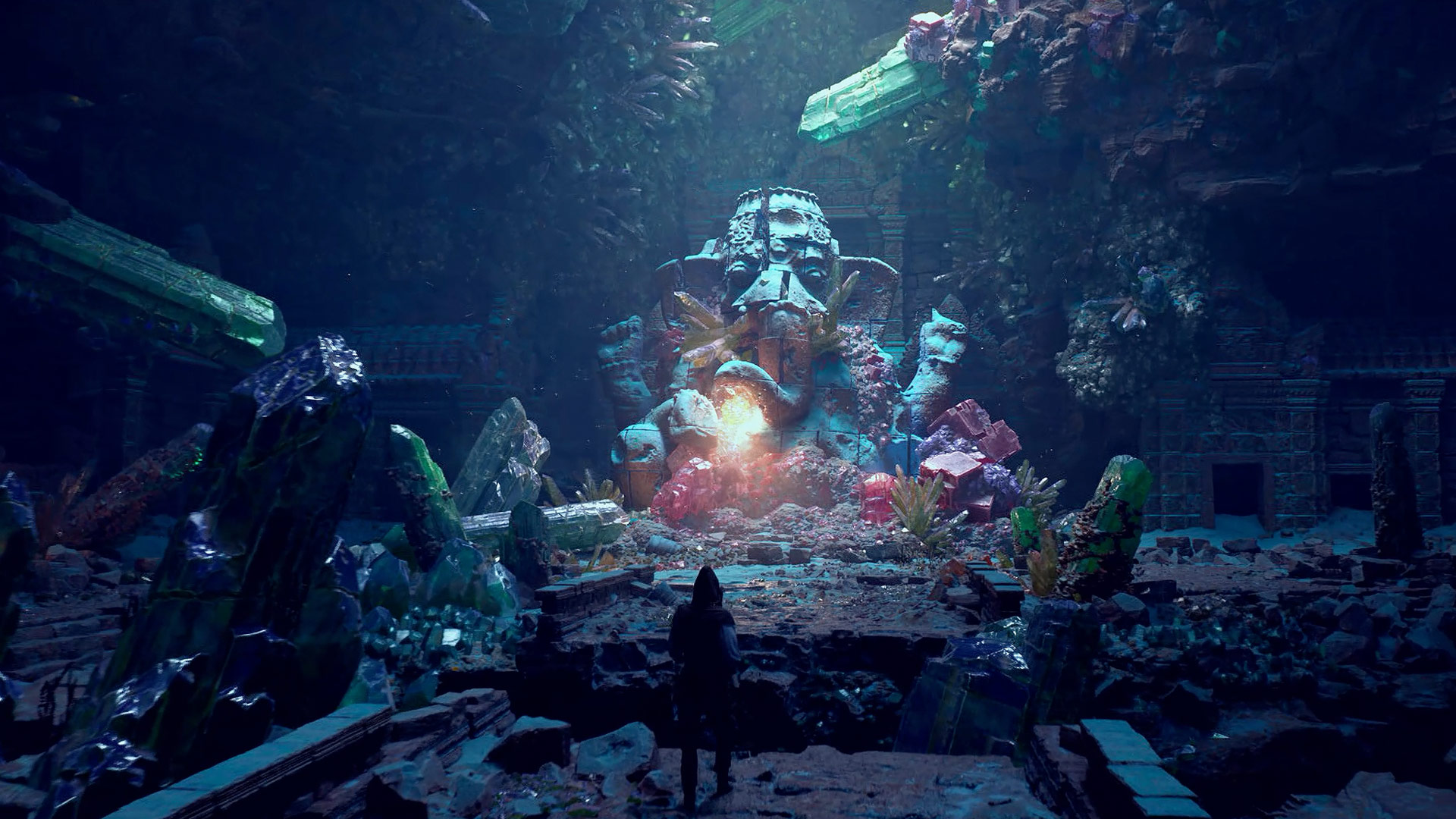







The procedural nature of Gaea by Quadspinner empowers 3D artists and matte painters to craft impressive and realistic environments with its powerful tools. Incorporating Gaea into a Houdini workflow, Rasha Shalaby — an Environment Artist and Matte Painter with over 20 years of experience in VFX for film, TV, and game cinematics — uncovers how to create terrain assets such as icy cliffs and rocky terrains that are usually harder to achieve through height-field simulations alone.
In this 3.5-hour workshop, Rasha demonstrates how to create geometry using various erosion and warp techniques in Gaea, as well as how to pull data to help create textures and data maps for assets. She shares how to export textures and maps into Houdini for the lookdev and lighting stage, and reveals how to establish the look, lighting setup, and cameras for the environment in Houdini. The renders are set up in Arnold for the ultimate final look.
Rasha offers a quick tour through some of Houdini’s top tools for creating complex, layered surfaces — with a focus on those that help to maintain the rocky look of cliffs. An overview of how to create a 360-degree panorama of the environment is also included, showing how Rasha brings in her renders of the horizon and, with some painting, masking, and adjustments in Photoshop, is able to use the resulting image to later light the scene for the final render.
This workshop is packed with Rasha’s tips and tricks learned from more than 20 years working in the industry. Included for subscribers is a collection of helpful project files, including the meshes, textures files, and the Houdini project used in the workshop.
11 Lessons
In this workshop, Rasha Shalaby introduces Gaea as an experimental and enjoyable procedural tool for creating terrain. The keys to success are understanding that Gaea works with 2D elevation data that represents 3D terrain, managing working resolution appropriately, and taking time to experiment with the tools it provides.
Duration: 10m 6s

This lesson demonstrates that realistic rocky terrain can be created in Gaea using a minimal node setup. Artists should keep in mind that hard-surface terrains require different approaches than soft erosional mountains, focusing on nodes like Fold and Convector, while using erosion sparingly and strategically. This workflow prepares artists for the more complex icy terrain project that follows.
Duration: 19m 21s

This lesson demonstrates an approach to terrain generation that focuses on building realistic detail directly into the heightmap rather than relying on displacement or scattering. By layering procedural effects, the technique creates weathered cliff formations with natural-looking sediment accumulation and snow coverage. This workflow saves time in the later stages of production by embedding fine detail early in the terrain-creation process.
Duration: 38m 48s

This lesson focuses on a workflow for creating photorealistic terrain textures in Gaea. Achieving natural-looking terrain requires careful observation of real-world weathering patterns and a combination of multiple data types like slope, protrusion, and height, through masking and blending techniques. Proper export settings guarantee that the work will translate effectively into Houdini.
Duration: 20m 40s

This lesson covers environmental setup inside Houdini. While the initial results are promising, showing interesting rock textures and coloration, test renders reveal issues that require refinement. These problems will be addressed in Gaea before continuing with look development.
Duration: 17m 20s

Back in Gaea, Rasha demonstrates a node-based workflow for creating realistic mountain terrain that focuses on scale and detail. By combining displacement, erosion, and Shatter nodes, she achieves a complex, natural-looking mountain better suited for high-resolution rendering.
Duration: 11m 37s

This lesson establishes a workflow for creating realistic layered terrain shaders that leverage heightfield operations in Houdini. The approach involves creating multiple masks that define different material zones, then using these masks to blend displacement maps and shaders appropriately. By adding subsurface scattering to the snow and flake normals for sparkle, and paying careful attention to displacement layering and specular properties, Rasha creates a photorealistic snow-covered mountain with reflective ice lakes.
Duration: 25m 23s

This lesson introduces a workflow for creating background mountain terrain designed to replace the buildings in the HDRI environment. By layering procedural nodes in Gaea, Rasha creates mountains that will integrate seamlessly with the environment. The workflow emphasizes controlling scale, maintaining flat foregrounds, and adding realistic snow, ensuring that the final background provides believable depth without overwhelming the main terrain.
Duration: 20m 47s

This lesson demonstrates that repurposing existing setups as templates for new terrain elements is an efficient approach to expanding 3D environments. By maintaining consistent naming conventions and attribute structures, the process minimizes shader adjustments, allowing for quick iteration. The final panoramic render provides high-quality background terrain that will be seamlessly integrated with an HDRI in post-production.
Duration: 11m 57s

This lesson demonstrates a professional workflow for matte painting and HDRI creation. The essential lesson is maintaining the integrity of 32-bit highlight information while leveraging 16-bit editing capabilities through a dual-file workflow. By combining photographic elements, procedural techniques, and atmospheric effects, Rasha shows how to transform a basic HDRI into a customized environment asset suitable for 3D rendering.
Duration: 30m 30s

The final lesson in the workshop takes an integrated approach to environment creation that combines terrain generation tools, custom HDRI creation, and atmospheric rendering techniques. Creating realistic atmospheric depth requires layering multiple atmospheric effects.
Duration: 10m 55s

Primary tools
For this workshop you’ll need:


Project Files
When artists download the workshop files, they'll get access to Rasha Shalaby's package for hands-on 3D modeling and texturing practice. Inside, you'll find:
- High-resolution textures – Texture files, including diffuse maps, and surface textures for realistic material creation
- 3D models (.obj) - Ready-to-use objects that artists can import into their preferred 3D software for immediate use
- Project scene files (.hiplc, .tor) - Workshop scenes that demonstrate techniques and provide starting points
- Reference images & resources - Supporting materials, including sample outputs and documentation to guide artists through the workshop's exercises - The instructor has provided the project files to make it easier to follow along with the workshop or jump to specific techniques that artists want to study. –
Skills Covered
Who’s this Workshop for?
This workshop is designed for intermediate to advanced 3D artists and environment artists who have foundational knowledge of Houdini and want to expand their terrain creation capabilities. Those working in VFX for film, television, and game cinematics will also find value in these techniques.
Digital artists seeking to enhance their procedural workflow and create more realistic rocky terrains will benefit significantly from this training. By learning to integrate Gaea's erosion tools with Houdini's powerful surface creation capabilities, artists will gain efficient methods for producing complex environments that would be challenging to achieve through traditional heightfield simulations alone.
Learning Outcomes
By completing this workshop, artists will have mastered the integration of Gaea and Houdini for creating photorealistic rocky terrain environments with professional lighting and texturing workflows.
Key skills include:
- How to create complex terrain geometry using Gaea.
- How to extract texture and data maps from Gaea.
- How to export Gaea assets into Houdini for lookdev and lighting pipeline integration.
- How to utilize Houdini's surface tools for maintaining realistic rocky cliff appearances.
- How to establish professional lighting setups and camera positioning for environment rendering.
- How to set up Arnold rendering workflows for achieving high-quality final environmental imagery.
- How to create 360-degree panoramas for comprehensive environment lighting and backdrop solutions.


