
 Photoshop
 Maya
Maya ZBrush
 Houdini
 Substance Painter
 Blender
 Arnold
 Nuke
Nuke KeyShot
 V-Ray
V-Ray Marvelous Designer
 Mari
Mari Marmoset Toolbag
 Substance Designer
 3ds Max
 Redshift
 3D Coat
 Lightroom
 Faceform Wrap
 After Effects
 Octane Render
 Speed Tree
 Daz3D
Daz3D Reality Capture
 Agisoft Metashape
 Modo
Modo Fusion
 Gravity Sketch
 Gaea
Gaea Premiere
 Cinema 4D
 Procreate
 Katana
 Quixel DDO
 Mudbox
 Mixamo
 SketchBook Pro
 SketchUp
 Adobe Medium
 Clip Studio Paint
 Natron
 Quixel Bridge
 Quixel Megascans
 Quixel Mixer
 Substance 3D Modeler
 World Creator
 Yeti
Yeti Ziva VFX
 Massive
 Materialize
 TreeIt
 Ornatrix
 PreForm
 SynthEyes
 Corel Painter
 QuickTime
 StoryboardPro
 xNormal
 animBot
 Unity
Unity ReCap
ReCap MeshMixer
 Gaffer
 DaVinci Resolve
 World Machine
 Krita
Krita


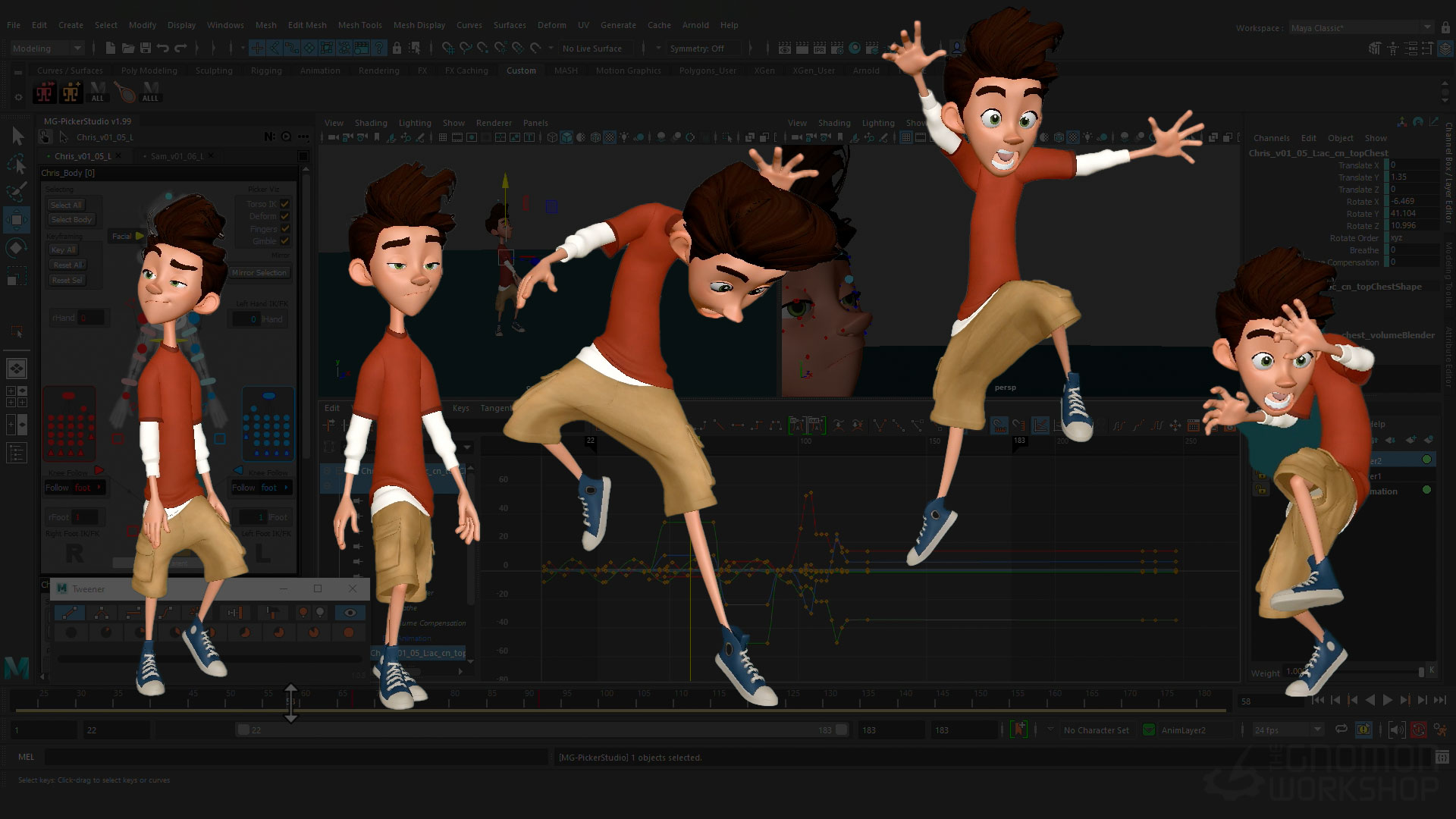









Walk through the creation of an animation shot from beginning to end with Senior Animator Mike Wilson, who breaks the process down into manageable sections. This insightful workshop not only provides practical techniques for you to improve your Maya workflow but also takes a broad look at the feature film industry, detailing exactly what you can expect to encounter as a professional 3D animator.
Mike Wilson offers a glimpse of what being an animator entails, and discusses what it can take to get there. Once you land a job as a professional animator, what is expected of you next? With this workshop, you’ll follow along as Mike sets up a shot to maximize time and resources so that deadlines can be met. You’ll discover how to use references to gather information from the real world and translate that into your animations. You’ll then learn how to block out an animation quickly, how to approach revisions, and how to polish and finalize a professional shot.
This workshop discusses how the role of an animator on a feature film is just a single part in a large apparatus and explains the importance of working in tandem with others on a team and complimenting departments. Artists can expect to gain a macro view of a feature film studio production while learning about the expected tasks of an animator.
Mike’s tutorial provides techniques and advice for any artist looking to break into feature film animation; however, it is recommended that artists have some understanding of the fundamental principles of animation to benefit fully from this workshop. The shot demonstrated in this workshop provides techniques that can be used time and again in your own shots.
Mike utilized the Adult Elephant from ProRigs which you can find here.
6 Lessons
In the opening lesson of the Animating for Feature Films workshop, Mike Wilson introduces himself and his experience working in the film industry. He sets out to give aspiring animators a realistic understanding of what the path toward feature film work actually looks like, drawing directly from his production experience. Mike emphasizes that success comes from building strong fundamentals through any form of animation work, combined with long-term dedication to continuous improvement.
Duration: 7m 2s

In this lesson, Mike emphasizes that successful animation requires both technical proficiency and strategic thinking about storytelling. The instructor's approach of combining real-world reference with performance-based acting reference demonstrates that great animation balances authenticity with artistic interpretation. Most importantly, animators must remember they're part of a collaborative team working toward a unified vision, where every shot serves the film's ultimate destination.
Duration: 28m 20s

This lesson Mike moves to working in Maya, reinforcing the idea that animation requires both technical skill and theoretical understanding, blending software-specific techniques with fundamental principles of movement and performance. He stresses that animation is an art form that transcends any particular tool, encouraging artists to focus on believability and storytelling above all else.
Duration: 35m 9s

In this lesson, Mike portrays the iterative nature of professional animation production, where shots can undergo multiple significant revisions based on client and director feedback. To address these successfully, he explains that technical proficiency, efficient workflows, and maintaining a positive attitude toward these revisions are essential skills for production animators.
Duration: 50m 33s

In this lesson, Mike focuses on facial animation, secondary motion, and the final polish of his elephant character. He walks through the full production pipeline, highlighting how animation must satisfy creative goals while remaining efficient and transferable to other departments. By demonstrating time-saving techniques, Mike shows how professional animation work needs to move beyond the individual animator and function seamlessly within a larger production workflow.
Duration: 25m 14s

In this final lesson, Mike emphasizes that becoming a skilled animator requires dedicated observation, continuous learning, and mastery of both artistic fundamentals and industry realities. While technical skills are essential, he highlights that an animator's value comes from the unique perspective, attitude and energy they bring to a team. Above all, Mike encourages growing through persistent practice and thoughtful observation of both animation and the world around you.
Duration: 13m

Primary tools
For this workshop you’ll need:


Skills Covered
Who’s this Workshop for?
This workshop is designed for aspiring 3D animators looking to improve their work and get into feature film projects. While some understanding of basic animation principles is recommended for these lessons, the content presented by Mike Wilson is structured to guide artists through professional production workflows and industry expectations in an accessible way.
Seasoned animators will find Mike's methodology highly useful in refining their own work, with Maya being their primary application. This workshop also provides macro-level insights into feature film pipelines, team collaboration dynamics, and efficient shot management that can benefit artists at various career stages who want to elevate their approach to animation.
Learning Outcomes
By completing this workshop, artists will have gained comprehensive knowledge of professional animation production workflows, from initial shot setup through final delivery in a studio environment.
Key skills include:
- How to set up animation shots efficiently to maximize time and meet production deadlines.
- How to gather and utilize real-world references to enhance animation authenticity and believability.
- How to block out animations quickly while maintaining quality and meeting director expectations.
- How to approach client revisions systematically and incorporate feedback into existing animation work.
- How to polish and finalize shots to professional feature film standards and specifications.
- How to collaborate effectively within large production teams and complement other department workflows.
- How to optimize Maya workflows for efficiency and consistency in professional animation environments.


